6 Best Fantasy Graphic Novels for Teens
Among the best fantasy graphic novels, The Hobbit Graphic Novel is the top pick for most buyers because it turns Tolkien’s adventure into an accessible visual story. It gives readers a faster, more illustrated route through Bilbo’s journey, with familiar characters, danger, and humor presented in comic-book form.
This guide is for Tolkien fans, gift shoppers, and readers who prefer artwork alongside prose. For this type of book, the most important factors are illustration quality and edition format, since hardcover and paperback versions can differ in durability, size, and price. The six picks below are ranked with clear reasons and honest drawbacks for each. Some favor rich world-building, while others work better for younger readers or shoppers seeking a collectible volume. Each choice offers a different way to experience dragons, quests, magic, and strange new worlds.
Quick Comparison
| # | Product | Best For | Price | |
|---|---|---|---|---|
| 1 | The Hobbit Graphic Novel | Fans of classic fantasy adventures | ~$11 | View → |
| 2 | The Odyssey Graphic Novel | Readers exploring Greek mythology | ~$10 | View → |
| 3 | Percy Jackson: The Lightning Thief Graphic Novel | Middle-grade demigod adventure fans | ~$10 | View → |
| 4 | The Awakening Storm Graphic Novel | Young readers seeking stormy fantasy | ~$8 | View → |
| 5 | The Iliad: A Graphic Novel | Students studying ancient Greek epics | ~$13 | View → |
| 6 | Allergic Graphic Novel | Kids navigating pet allergies | ~$7 | View → |
6 Top Fantasy Graphic Novel Picks
This ranked list counts down from strong choices to the top fantasy graphic novel for different reading tastes.
6. Allergic Graphic Novel

Best for: Middle-grade readers facing food allergies
Allergic: A Graphic Novel follows a girl who learns that she has multiple food allergies. She must adjust to new rules around eating, friendships, and everyday routines. The graphic novel format pairs visual storytelling with a personal health challenge, making the subject easier for many younger readers to approach. At around $7, it also costs less than many new hardcover books.
The story’s strongest feature is its focus on feelings as much as food safety. Friendship and family play a central role as the main character learns how allergies can affect school, social plans, and her sense of identity. Its treatment of resilience feels grounded rather than overly dramatic. Readers who have dealt with health changes, dietary limits, or feeling different may recognize parts of the character’s experience. It suits middle-grade audiences, though older readers may find the themes and presentation fairly young.
Pros
- Explains the emotional side of living with multiple food allergies.
- Uses graphic novel storytelling to make a serious topic accessible.
- Includes friendship, family support, and personal resilience.
Cons
- The middle-grade focus may feel too young for adult readers.
- It may not provide detailed medical guidance or practical allergy-management advice.
5. The Iliad: A Graphic Novel

Best for: Young readers exploring Greek mythology
The Iliad: A Graphic Novel retells Homer’s ancient war story through sequential art and condensed dialogue. It follows the conflict surrounding Troy, including Greek heroes, Trojan defenders, gods, pride, and revenge. The graphic format gives the story a more approachable entry point than a full translation, especially for readers who find classical epics difficult to start. At around $13, it also costs less than many hardcover mythology editions.
Its clearest strength is accessibility. Visual panels can make character relationships, battlefield scenes, and divine interference easier to follow. The young adult focus should suit middle and high school readers who want the major events without working through older poetic language. This is an adaptation, not a complete replacement for Homer’s original text. It may leave out smaller episodes, extended speeches, and some cultural context. Readers should also expect war-related violence and tragic events, even in a simplified presentation.
Pros
- Graphic panels break a complex Greek epic into easier-to-follow scenes.
- The adaptation introduces major mythological characters without requiring a full translation.
- Around $13, it offers a lower-cost way to begin studying The Iliad.
Cons
- A shortened adaptation cannot include every episode, speech, or detail from Homer’s poem.
- Readers seeking the original verse, extensive notes, or deeper historical context will need another edition.
4. The Awakening Storm Graphic Novel

Best for: Readers starting a new fantasy series
The Awakening Storm: A Graphic Novel opens City of Dragons as its first volume. It uses comic-style storytelling, combining artwork and written dialogue in one format. That makes it a practical pick for readers who prefer visual narratives over long blocks of prose. At around $8, it also offers a low-cost way to sample the series before buying later books.
The clearest standout is its role as an entry point. Because this is volume one, new readers can begin at the intended starting place without tracking down earlier installments. The graphic novel format may also suit younger readers, reluctant readers, or anyone who wants a shorter visual reading session. However, the available product details do not list page count, dimensions, binding, artwork style, or a detailed plot summary. Buyers should check the retailer’s listing for those specifics before ordering.
Pros
- First volume gives new readers a clear starting point.
- Graphic novel format pairs artwork with written storytelling.
- Around $8 keeps the initial purchase relatively affordable.
Cons
- Available details do not confirm page count, size, or binding.
- As a series opener, it may not provide a complete standalone story.
3. Percy Jackson: The Lightning Thief Graphic Novel
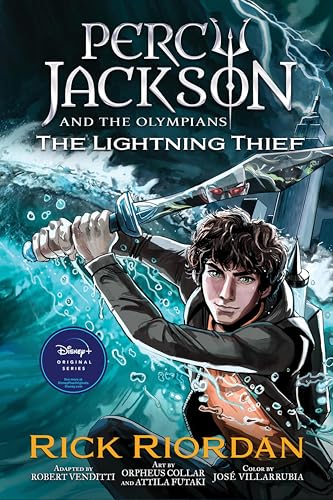
Best for: Young readers who prefer illustrated adventures
The Lightning Thief: The Graphic Novel retells Percy Jackson’s first adventure in a comic-book format. Percy discovers that Greek myths are real, learns he is connected to the gods, and joins a dangerous quest involving the stolen master bolt. This is Book 1 in the graphic novel series, so it offers an accessible entry point for readers starting the story.
The illustrated format is the main draw. Panels, speech bubbles, and action scenes can make the plot easier to follow than a full prose novel, especially for readers who lose interest in longer chapters. At around $10, it is also a relatively low-cost way to introduce the series or add a readable title to a home library. Still, the available listing does not provide details such as page count, dimensions, binding, paper type, or included extras. Edition details may vary, so check the seller’s listing before ordering.
Pros
- Graphic panels break the story into short, visual sections.
- Book 1 gives new readers a clear starting point.
- Around $10 makes it an affordable gift or library addition.
Cons
- The adaptation leaves out some detail from the original novel.
- Missing edition information makes page count and physical format unclear.
2. The Odyssey Graphic Novel

Best for: Young adults exploring Greek mythology
The Odyssey: A Graphic Novel retells Homer’s epic through sequential art instead of a standard prose translation. It follows Odysseus after the Trojan War as he faces monsters, gods, shipwrecks, and the long journey home. The young adult focus may make this classic story easier to approach for readers who find the original poem difficult.
The visual format is the main draw. Panels can make major scenes, such as the Cyclops encounter and the voyage past dangerous islands, easier to picture and discuss. It also offers a shorter entry point than reading the complete epic in verse. At around $10, it is a relatively low-cost option for a classroom shelf, starter mythology collection, or young reader’s gift. Still, no page count, edition details, artwork specifications, or other feature information is provided, so buyers should check the listing carefully before ordering.
Pros
- Graphic panels give the story a more visual and accessible format.
- The young adult adaptation provides an approachable introduction to Homer’s epic.
- Greek mythology content can support classroom reading or guided discussion.
Cons
- A condensed adaptation may leave out scenes, details, and language from the original poem.
- No page count, illustrator information, or edition specifications are listed.
1. The Hobbit Graphic Novel

Best for: Visual readers exploring classic fantasy
This book adapts The Hobbit into a graphic novel format. It retells Bilbo Baggins’s journey from a quiet home to a dangerous quest involving dwarves, trolls, riddles, and a dragon. The visual format breaks the story into illustrated scenes and dialogue, making the adventure easier to follow than a long prose novel. At around $11, it offers a relatively low-cost way to introduce younger readers or casual fantasy fans to Tolkien’s classic story.
The main appeal is accessibility. Readers can experience the central plot without committing to the full length and descriptive detail of the original novel. The graphic presentation also gives characters, locations, and action a more immediate form. Since no feature list or edition details are provided, buyers should check the listing for page count, physical size, publisher, and art style before ordering. Different printings may vary in those areas. This is best viewed as an adaptation, not a replacement for the complete book.
Pros
- Graphic panels and dialogue make the fantasy plot easier to follow.
- Adapts a well-known classic for readers who prefer visual storytelling.
- Around $11 makes it a budget-friendly introduction to Middle-earth.
Cons
- The adaptation may leave out descriptive detail and subplots from the original novel.
- No edition details are provided, so page count, size, and artwork may vary by listing.
Buying Guide
The most important factor is the match between the book’s tone and the reader’s age. A richly illustrated quest can still disappoint if its violence, romance, or story complexity feels wrong.
- Story tone: Choose light adventures for younger readers, or darker titles with political conflict and horror for mature audiences. Check the publisher’s age rating before buying.
- Artwork style: Review 5 to 10 sample pages online. Look for clear panel layouts, readable lettering, and colors that fit the mood, such as muted shades for gothic fantasy.
- Book length: A single-volume story usually falls between 120 and 300 pages. For longer adventures, check whether the collection includes one complete arc or ends on a cliffhanger.
- Edition and format: Hardcover editions suit collectors and often measure about 6 by 9 inches. Paperback copies cost less, while digital versions work well on tablets at least 8 inches wide.
- Series commitment: Confirm the total number of planned or published volumes. A three-book series costs less and requires less shelf space than a ten-volume saga.
- Price: Expect roughly $12 to $25 for paperback editions and $20 to $40 for hardcovers. Box sets can offer better value when they include at least three books.
If you cannot have everything, prioritize story tone and age suitability, since strong artwork cannot fix a poor content match.
Frequently Asked Questions
How do I choose a fantasy graphic novel?
Choose a fantasy graphic novel by matching its world, tone, artwork, and reading length to your preferences. Check whether you want dragons, political intrigue, folklore, or lighter adventure before buying. Many collected editions run about 120 to 200 pages, while deluxe hardcovers may combine three or more original issues.
What are the best fantasy graphic novels for adults?
The best fantasy graphic novels for adults usually combine complex characters, darker themes, and artwork that rewards close attention. Look for stories involving moral conflict, war, grief, or power rather than age labels alone. Titles in this category often span 4 to 10 volumes, so check the series length first.
Can fantasy comics be good for readers new to graphic novels?
Yes, fantasy comics can suit new graphic novel readers when they use clear layouts, strong character introductions, and manageable story arcs. A standalone book or first volume of 100 to 160 pages offers an easier starting point than a 20-volume saga. Preview a few pages to check panel flow and text density.
Are fantasy graphic novels suitable for children?
Some fantasy graphic novels suit children, but age ratings, themes, reading level, and artwork should guide the choice. Books for younger readers often use simpler plots and fewer panels per page, while middle-grade stories may target ages 8 to 12. Review content warnings for violence, fear, or mature language.
Conclusion
The Hobbit Graphic Novel remains the top recommendation for readers who want Tolkien’s adventure in visual form, especially newcomers, younger fans, and gift buyers seeking a familiar story. If your priority is darker world-building, a longer series, or a less traditional quest, choose a different title that better matches the reader’s age and preferred tone. Before buying, double-check the edition’s size, format compatibility, included volume count, and current price, since listings can vary by retailer. Pay attention to the artwork, too, because fantasy comics range from bright and playful to shadowy and detailed. The right choice should invite repeat readings without feeling too demanding.