7 Best Books for Mentalism for Beginners
Read Your Mind: Habits for Success is the top pick for most buyers because it presents mental habits in a practical, easy-to-follow format. For readers comparing the best books for mentalism, this self-improvement title is best understood as a guide to productive habits and sharper self-awareness.
This guide is for curious readers who want clearer thinking, better focus, and a grounded introduction to mind-focused ideas. When comparing these titles, pay close attention to explanation quality and the amount of practical exercises, since both affect how easily you can use what you read. The seven picks below are ranked with clear reasons and honest drawbacks for each, so you can choose a book that fits your goals and reading style.
Quick Comparison
| # | Product | Best For | Price | |
|---|---|---|---|---|
| 1 | Read Your Mind: Habits for Success | Habit-Building Success Readers | ~$15 | View → |
| 2 | Alexander and the Terrible, Horrible, No Good, Very Bad Day | Kids Facing Difficult Days | ~$6 | View → |
| 3 | Magic Tricks for Everyone: 50 Card, Coin & Mentalism Tricks | Beginner Magic Enthusiasts | ~$19 | View → |
| 4 | MilesMagic Svengali Force Pad | Aspiring Card Trick Performers | ~$15 | View → |
| 5 | Social Skills Picture Book for High School and Beyond | Teens Practicing Social Skills | ~$17 | View → |
| 6 | Mentalism Mind Reader Hardcover Journal | Mentalism Practice Journal Users | ~$17 | View → |
| 7 | Mark Twain Life Skills Mental Health Workbook for Kids | Kids Learning Coping Skills | ~$15 | View → |
7 Top Mentalism Books to Read
This ranked list counts down from practical introductions to the top pick for developing stronger mentalism skills.
7. Mark Twain Life Skills Mental Health Workbook for Kids

Best for: Grades 5–8 homeschool families
The Mark Twain Life Skills Mental Health Workbook is a student workbook for grades 5–8, designed for classroom or homeschool lessons. It covers anxiety, stress, social-emotional learning, nutrition, exercise, work ethic, drug awareness, and sexually transmitted diseases. Newer material also addresses financial preparation for adulthood, including choices students may face as they begin managing money. At around $15, it offers a low-cost way to add practical life instruction to a weekly curriculum.
Its strongest feature is the range of activity types. Graphic organizers, self-inventories, puzzles, cloze exercises, and real-life scenarios give students several ways to process each topic. The workbook focuses on personal choices rather than simple definitions, so lessons can prompt discussion about healthy routines, money habits, and handling stressful situations. The content also reaches beyond mental health, which makes it useful for a broader life-skills unit. However, buyers should review sensitive sections before assigning them, especially material on drugs and sexually transmitted diseases.
Pros
- Covers mental health, health habits, social skills, and financial literacy in one workbook.
- Uses puzzles, organizers, inventories, and scenario-based tasks to vary seatwork.
- Revised sections include nutrition, exercise, work ethic, and planning for future expenses.
Cons
- Some topics, including sexual health and drugs, may require parent or teacher guidance.
- The workbook may feel too broad for buyers seeking a focused anxiety or financial literacy program.
6. Mentalism Mind Reader Hardcover Journal

Best for: Mentalists who journal routines
This black hardcover journal suits readers who enjoy mentalism, stage hypnosis, or wizard-themed gifts. Its cover uses a classic mentalism book design, so it feels more distinctive than a plain notebook. At around $17, it also fits many casual gift budgets without looking disposable.
Inside, the journal provides 240 line-ruled pages across 120 sheets. That gives the owner plenty of space for routine ideas, performance notes, predictions, or personal writing. A built-in elastic band keeps the cover closed, while the ribbon bookmark helps mark a working page. The inner pocket expands for loose notes, cards, or small papers, and the pen holder keeps a writing tool nearby. The design is its main appeal, but the storage features add useful everyday function.
Pros
- Hardcover construction offers more protection than a soft notebook.
- 240 lined pages provide substantial room for notes and ideas.
- Pocket, pen holder, elastic closure, and ribbon bookmark support organized use.
Cons
- Line-ruled pages are less suitable for diagrams, drawings, or free-form layouts.
- The listing does not indicate that a pen comes with the journal.
5. Social Skills Picture Book for High School and Beyond

Best for: Teens building everyday social confidence
The Social Skills Picture Book: For High School and Beyond is a visual guide aimed at older teens and young adults. Its focus appears to be social situations that can feel confusing, stressful, or hard to practice in real life. The picture-book format may make ideas easier to discuss than a text-heavy workbook, especially during coaching, counseling, or family conversations.
The main appeal is its age range. Many social-skills resources target young children, so a book labeled for high school and beyond may feel more relevant to older readers. It could support conversations about communication, behavior, and social choices without relying only on lectures. The listing provides no page count, dimensions, binding details, or material information, so buyers cannot judge its physical format before ordering. At around $17, it remains a relatively low-cost resource, though prices can change.
Pros
- Visual presentation may help readers discuss social situations with less reliance on long explanations.
- The high school and beyond focus gives it a more age-appropriate starting point than books made for young children.
- Around $17, it offers an affordable option for parents, educators, or counselors seeking a supplemental resource.
Cons
- The listing does not provide page count, size, format, or other specifications, making it hard to assess the book before purchase.
- A picture-based guide may not satisfy readers who need detailed written instruction, practice worksheets, or a structured lesson plan.
4. MilesMagic Svengali Force Pad

Best for: Custom close-up mentalism routines
This MilesMagic Svengali Force Pad is a blank forcing book for performers who want to build their own mentalism effects. At around $15, it offers a low-cost way to create reveals around selected words, numbers, symbols, colors, shapes, cards, dates, names, or drawings. The supplied details do not list the pad’s page count, paper size, or materials, so check the current listing before ordering.
Its broad format is the main appeal. You can design a color-changing drawing book, make an image appear or vanish, or create a simple book test using a word, journal entry, or sketch. It can also support a mathematical force, such as guiding a spectator toward a target number for a magic square. A prediction routine can use the forced choice as its setup, then reveal a prepared outcome. The method depends on scripting, practice, and natural handling. This is a prop framework, not a complete routine with a fixed performance script. That flexibility suits performers who enjoy writing custom presentations, but it may frustrate buyers seeking an instant trick.
Pros
- Supports many custom forces, including cards, names, dates, numbers, and symbols.
- Can form the basis for color changes, appearances, vanish effects, and book tests.
- Works with prediction routines and mathematical presentations.
Cons
- The pad’s listed page count, dimensions, and paper materials are unclear.
- It requires performance practice and routine development, rather than offering a ready-made act.
3. Magic Tricks for Everyone: 50 Card, Coin & Mentalism Tricks
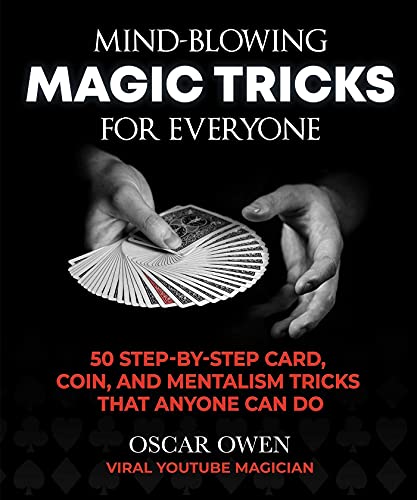
Best for: First-time hobby magicians
Mind-Blowing Magic Tricks for Everyone is a beginner-focused book with 50 magic routines. The collection covers card tricks, coin tricks, and mentalism, so readers can explore more than one style without buying several guides. Each routine uses step-by-step instructions, which should make the book easier to follow than a collection of short trick descriptions. At around $19, it also costs less than many hobby kits.
The strongest feature is the range of material in one compact purchase. Card tricks suit readers who already have a standard deck, while coin routines use objects found in many homes. Mentalism adds prediction and thought-reading effects for people who want performance ideas beyond sleight of hand. The listing does not provide details about the book’s page count, binding, illustrations, or included accessories, so buyers should not expect a full prop kit. New learners will still need practice before performing smoothly, even with clear instructions.
Pros
- Includes 50 separate tricks, giving readers a broad practice list.
- Covers cards, coins, and mentalism in one book.
- Step-by-step directions can help new performers learn each routine in stages.
Cons
- The book does not appear to include cards, coins, or other props, so buyers may need supplies.
- Written instructions cannot replace live coaching or video demonstrations for difficult sleights.
2. Alexander and the Terrible, Horrible, No Good, Very Bad Day

Best for: Families discussing big feelings
Alexander and the Terrible, Horrible, No Good, Very Bad Day follows one child through a string of frustrating mishaps. Alexander wakes with gum in his hair, finds trouble at school, and decides Australia might offer an escape. The story gives young readers a clear way to talk about bad moods, unfair moments, and the fact that difficult days happen to everyone.
Its strongest feature is the honest tone. Alexander does not quickly learn a perfect lesson or turn cheerful on command. Instead, the book treats his anger as real while keeping the situation funny. That balance can help children feel understood without making every complaint seem like a crisis. At around $6, it can also make a low-cost addition to a home or classroom reading shelf. The listing provides no page count, dimensions, format, or material details, so buyers should check the specific edition before ordering.
Pros
- Gives children clear language for frustration and disappointment.
- Uses humor to make emotional conversations easier.
- The story works well for read-aloud time and group discussion.
Cons
- The listing does not confirm the edition’s page count, size, binding, or format.
- Alexander’s repeated complaints may feel gloomy for children who prefer upbeat stories.
1. Read Your Mind: Habits for Success
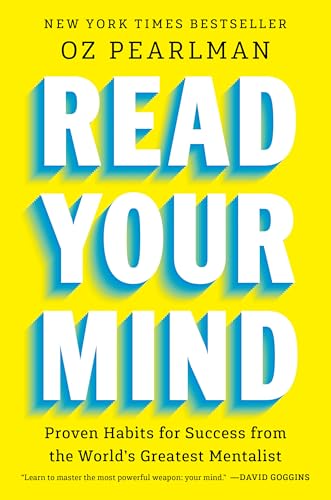
Best for: Readers seeking practical mindset advice
Read Your Mind: Proven Habits for Success from the World’s Greatest Mentalist is a book about success habits, mental focus, and the way people think. Its main appeal comes from the mentalist angle, which gives the subject a different frame than a standard productivity guide. The book may suit readers who enjoy psychology, performance, and personal improvement in the same package.
At around $15, it is priced like an accessible paperback or gift book. Still, the available listing does not provide a page count, format, edition, author details, or chapter breakdown. That makes it difficult to judge the book’s length or depth before buying. The word “proven” appears in the title, but buyers should not treat that wording as evidence of formal scientific research. Expect a broad habit and mindset book rather than a detailed academic text. Its strongest feature is the focused theme, connecting mentalist techniques with everyday success habits.
Pros
- Combines success habits with a mentalist-centered perspective.
- Covers a clear personal-development theme in one focused book.
- Around $15, making it a relatively low-cost gift or casual read.
Cons
- No page count, format, edition, or chapter information is provided.
- The listing does not explain which habits or techniques the book includes, so the content may feel difficult to assess before purchase.
Buying Guide
The most important factor is instructional depth. A strong mentalism book should explain the method, performance script, audience management, and practice process, not just list effects.
- Teaching depth: Look for at least 150 pages with full explanations, performance examples, and troubleshooting. Books that devote only one page to each routine may feel thin.
- Skill level: Choose material that matches your experience. Beginners should seek books with basic suggestion, billet work, and presentation advice before buying advanced cold-reading texts.
- Practice demands: Check how much rehearsal each effect needs. A useful choice may include routines that require 2 to 5 hours of practice, plus a few effects you can perform after one evening.
- Ethics and audience care: Prefer authors who discuss consent, respectful readings, and honest framing. Avoid books that encourage medical claims, financial predictions, or fear-based performances.
- Format and price: Print books often cost about $15 to $40, while digital editions may cost less. Check page count, diagrams, index quality, and whether the edition includes scripts or photographs.
If you can choose only one factor, prioritize teaching depth because clear instruction helps turn interesting methods into reliable performances.
Frequently Asked Questions
How do I choose the right book for learning mentalism?
Choose a mentalism book by matching its focus to your goal, such as close-up routines, stage performance, psychological techniques, or theory. Check the table of contents, sample pages, and reader notes before buying. A useful starter shelf might include one theory book, one routine collection, and one performance guide.
What are the best books for learning mentalism?
The best books for learning mentalism combine performance methods, audience management, scripting, and ethical guidance. Start with Corinda’s 13 Steps to Mentalism for a broad foundation, then add a modern text such as Practical Mental Magic for presentation ideas. Expect older books to use dated language and require careful adaptation.
Can mentalism books teach you everything you need?
Mentalism books can teach methods, structure, and presentation, but they cannot replace practice, feedback, or responsible audience handling. Many routines require memorization, scripting, and repeated rehearsal before they feel natural. Set aside 20 minutes per day, and practice one effect until you can explain every step clearly.
Are classic mentalism books still useful today?
Classic mentalism books remain useful when readers treat them as historical foundations rather than complete modern courses. Corinda’s 13 Steps, for example, covers core subjects across 13 sections, but some references, wording, and assumptions now feel dated. Pair older material with current advice on consent, privacy, and performance ethics.
Conclusion
Read Your Mind: Habits for Success is the top choice for readers who want a beginner-friendly mentalism book that links mind-reading performance with confidence, observation, and repeatable practice. If your priority is building stage-ready routines instead of personal habits, choose a technique-first manual with scripts, audience management advice, and step-by-step effects that give you more material to rehearse. Before buying, double-check the book’s size and format, compatibility with your e-reader, included quantity, and current price, since listings may cover single copies, bundles, or different editions; also check the table of contents for card work, psychological forces, close-up routines, or theory that matches your goals.