5 Best Islamic Parenting Books for New Parents
Among the best islamic parenting books, Muslim Parenting: A-Z Guide to Positive Islamic Parenting is the top pick for most buyers because its A-to-Z format makes Islamic guidance easy to find and apply. Instead of presenting broad advice alone, it organizes parenting topics into clear, manageable entries for everyday family life.
This guide suits Muslim parents who want practical support rooted in Islamic values, especially those building routines around discipline, communication, and character. For parenting books in this category, the most important factors are the age range covered, the clarity of each lesson, and how easily advice fits real family situations. Readers should also consider whether they prefer a quick reference guide or a longer, more detailed discussion. The five picks below are ranked with clear reasons and honest drawbacks for each, so you can choose the right fit for your home.
Quick Comparison
| # | Product | Best For | Price | |
|---|---|---|---|---|
| 1 | Muslim Parenting: A-Z Guide to Positive Islamic Parenting | Positive Islamic parenting guidance | ~$5 | View → |
| 2 | Fortress of the Muslim Islamic Book | Daily Muslim supplication learners | ~$10 | View → |
| 3 | Yusuf Learns About Puberty Islamic Guide for Boys | Muslim boys entering puberty | ~$10 | View → |
| 4 | The Muslim Parents Handbook: Parenting Guide | Parents seeking practical faith guidance | ~$19 | View → |
| 5 | The Quran Journey Holy Quran Made Simple Study Guide | Beginners studying the Quran | ~$15 | View → |
5 Islamic Parenting Books Worth Reading
This ranked list counts down from the fifth choice to the top pick, with each title selected for practical family guidance.
5. The Quran Journey Holy Quran Made Simple Study Guide

Best for: New readers seeking guided Quran study
The Quran Journey is a beginner-friendly study guide covering all 114 surahs. It pairs short summaries with illustrated explanations and simple language, giving readers a clear starting point for understanding the Quran’s main themes. The format suits people who want more context than a translation alone, but less detail than a full academic tafsir. At around $15, it also works as an affordable gift for new readers and those returning to regular study.
Its strongest feature is the easy-to-follow structure. Bite-sized sections break the material into manageable reading sessions, while step-by-step guidance supports daily reflection or group discussion. The illustrations may help visual learners connect ideas across different surahs. This book is best viewed as an introduction and companion guide, not as a replacement for the Quran itself or a detailed work from a qualified scholar. Readers seeking Arabic text, extensive commentary, or source citations may need another resource alongside it.
Pros
- Covers all 114 surahs in one organized study guide.
- Uses short sections and plain language for less overwhelming reading.
- Illustrations can support visual learners and group study discussions.
Cons
- Summaries and illustrations cannot provide the depth of a full scholarly tafsir.
- Readers wanting Arabic text, translation comparisons, or detailed references will need a separate book.
4. The Muslim Parents Handbook: Parenting Guide

Best for: Muslim parents seeking practical guidance
This parenting handbook presents 95 strategies aimed at repairing disconnection and helping children grow into capable, confident people. Its focus is specific: Muslim family life, parent-child relationships, and practical steps rather than a general parenting overview. At around $19, it sits in the lower-priced range for a parenting book, though the final cost can change by seller.
The large strategy count is the clearest point of difference. Ninety-five ideas give readers many starting points, which may help families choose approaches that fit a child’s age, personality, and current challenge. The title also puts emotional repair at the center, not only discipline or achievement. Still, the available product details do not list the page count, format, language, author credentials, or any worksheets and bonus materials. Buyers should treat “proven” as a claim in the title, not a substitute for checking sample pages or independent reviews. This likely suits readers seeking a focused Muslim parenting resource more than shoppers wanting a fully specified workbook.
Pros
- Provides 95 separate strategies, giving parents a broad set of ideas to review.
- Focuses on healing parent-child disconnection, a concern many general discipline books address only briefly.
- Centers Muslim family needs, which may feel more culturally relevant than a broad parenting guide.
Cons
- The listing does not provide page count, format, or sample content, so value is hard to judge before purchase.
- The available details do not show how deeply the book covers relationship repair or child development.
3. Yusuf Learns About Puberty Islamic Guide for Boys

Best for: Muslim boys approaching puberty
Yusuf Learns About Puberty the Islamic Way is a puberty guide written for boys and their families. It combines basic growing-up topics with an Islamic perspective, making it a possible fit for parents who want religious values included in these conversations. At around $10, it sits in the lower-priced range for a single educational book.
The title suggests a gentle, character-led approach rather than a medical reference manual. That can make sensitive subjects easier to introduce at home, especially when a parent wants a starting point for discussion. However, no feature details are available for the edition listed here. Buyers cannot confirm its page count, illustrations, binding, reading level, or specific subjects before ordering. The book also appears designed around boys’ puberty, so it may not suit families seeking a broader guide for all children or a detailed health resource. Its strongest point is the clear focus: puberty education presented through an Islamic framework. Parents should still review the content and decide if it matches their family’s preferred level of detail.
Pros
- Focuses on puberty, giving parents a direct starting point for age-related conversations.
- Uses an Islamic approach, which may fit Muslim families seeking faith-based guidance.
- Written specifically for boys, keeping the intended audience clear.
Cons
- No page count, format, illustrations, or content breakdown is provided.
- It may offer less medical detail than a comprehensive puberty or health textbook.
2. Fortress of the Muslim Islamic Book
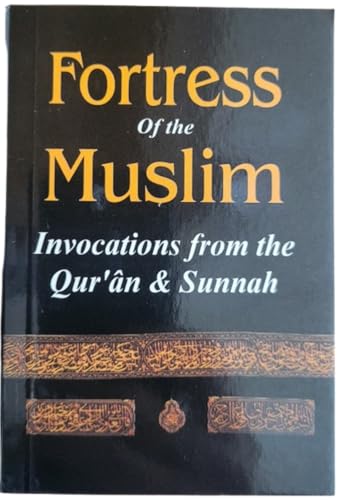
Best for: Daily dua reading on the go
Fortress of the Muslim is a pocket-size Islamic prayer book containing supplications from the Quran and Sunnah. Each entry presents Arabic text alongside transliteration and an English translation, giving readers several ways to follow the wording. Its compact paperback format fits easily into a purse, backpack, desk drawer, or travel bag. At around $10, it also fits many small gift budgets.
The main strength is its practical layout. Readers who cannot yet read Arabic can use the transliteration and translation, while Arabic readers still have the original script in view. The collection suits daily worship, Ramadan use, Eid presents, and small Islamic favors. Its paperback cover keeps the book light and affordable, but it will not offer the same protection as a hardcover edition. The pocket format also leaves less room for large type or spacious page design. Buyers should confirm the listing details before ordering, since product titles and versions can vary across sellers.
Pros
- Includes duas drawn from both the Quran and Sunnah.
- Arabic, transliteration, and English translation support different reading needs.
- Pocket-size paperback design makes it easy to carry and give as a small gift.
Cons
- Compact pages may use smaller print than a full-size prayer book.
- Paperback binding can wear faster than a hardcover with frequent daily use.
1. Muslim Parenting: A-Z Guide to Positive Islamic Parenting

Best for: Muslim parents seeking practical guidance
Muslim Parenting: A-Z Guide of Positive Islamic Parenting is a parenting book focused on raising children through Islamic values. Its A-to-Z format suggests a topic-by-topic reference, which may help parents find guidance without reading the book in order. The listing also places it alongside Muslim children’s books and Islamic stories for kids, so it may suit families building a faith-based home library.
Its main strength is the clear religious focus. Parents looking for advice connected to Islamic teachings may find the subject more relevant than a general parenting guide. The compact title and alphabet format also make the book sound approachable for quick reading or discussion. At around $5, it costs less than many parenting books, though prices can change. The available details do not confirm the page count, cover material, edition, illustrations, or digital and print formats. Buyers should check those points before ordering, especially if they want a picture book for children rather than a guide written for adults.
Pros
- Uses an A-to-Z structure that may make specific parenting topics easier to locate.
- Focuses on positive parenting within an Islamic family setting.
- Costs around $5, making it a low-cost addition to a family reading collection.
Cons
- The listing does not provide a page count, size, format, or edition details.
- The title does not confirm the intended child age range, reading level, or use of illustrations.
Buying Guide
The most important factor is trustworthy religious sourcing. A parenting guide should distinguish the Qur’an, authentic hadith, scholarly opinion, and the author’s advice, so families do not confuse tradition with religious obligation.
- Religious sourcing: Choose books that cite chapter-and-verse references, identify hadith collections, and name a qualified reviewer or author.
- Child’s age: Match the reading level to a clear range, such as ages 2–5, 6–9, or 10–13. Examples should fit that stage.
- Practical tools: Favor chapters with scripts, family activities, or seven-day plans. A prayer section might include a routine lasting 10 minutes.
- Cultural fit: Check whether the advice suits your family’s language, madhhab, and household structure. Read 10 sample pages before buying when possible.
- Format and cost: Compare paperback, ebook, and audiobook options. A 150–250-page paperback priced at $12–$25 is a reasonable starting point for one topic.
If you cannot have everything, prioritize reliable religious sources over format, price, or extra activities.
Frequently Asked Questions
How do I choose Islamic parenting books for my family?
Choose an Islamic parenting title that matches your child’s age, your family’s values, and the specific challenge you face. For example, books for preschoolers may use short stories and simple activities, while guides for teenagers often discuss prayer, identity, friendships, and online behavior.
What topics should Muslim parenting guides cover?
Muslim parenting guides should cover faith, character, communication, discipline, emotional health, and age-appropriate family routines. Look for practical examples, such as a seven-year-old learning daily prayer or a teen handling peer pressure without losing trust at home and honest conversation.
Can Islamic parenting books help with discipline?
Yes, Islamic parenting books can help when they connect discipline with mercy, clear limits, accountability, and a child’s dignity. Useful choices offer scripts and steps for real situations, such as a six-year-old hitting a sibling or refusing bedtime, instead of relying only on punishment.
Are Islamic parenting books suitable for different ages?
Yes, Islamic parenting books suit different ages when the language, examples, and expectations fit the child’s development. Picture books may introduce kindness and dua to children ages 3 to 6, while longer guides can address worship, identity, and responsibility for ages 10 and up.
Conclusion
Muslim Parenting: A-Z Guide to Positive Islamic Parenting is the strongest fit for parents who want one broad, practical starting point for faith-based family guidance. If your priority is advice for a specific age, challenge, or family stage, choose the more focused guide instead, since its narrower scope may make relevant examples easier to apply. Before buying, double-check the edition’s page size, language or format compatibility with your device, included quantity or volume count, and current price. Check the publication date too, because newer editions may update references, terminology, or recommended approaches. A clear contents page can also show if the book covers discipline, communication, routines, and spiritual development.