4 Best No Battery Watch for Travel
The Casio AE-1500WHX-1AV Digital Sports Watch is the top pick for most buyers, making it a strong choice in searches for the best no battery watch. Its main advantage is long battery life, which suits people who want a dependable watch with little upkeep. The large digital display also makes the time easy to read at a glance.
This guide is for shoppers who want a durable, affordable timepiece for daily wear, outdoor tasks, or travel. The key factors are case size and battery life, since a bulky watch can feel uncomfortable and frequent battery changes add hassle. Water resistance, button layout, and strap comfort matter, too. The four picks below are ranked with clear reasons and honest drawbacks for each, so you can compare their strengths before choosing one.
Quick Comparison
| # | Product | Best For | Price | |
|---|---|---|---|---|
| 1 | Casio AE-1500WHX-1AV Digital Sports Watch | Best for outdoor workouts | ~$24 | View → |
| 2 | Fitness Tracker | Best for daily step tracking | ~$20 | View → |
| 3 | Fitness Tracker | Best for heart rate monitoring | ~$20 | View → |
| 4 | Hearkent Ladies Pedometer Watch | Best for older women walkers | ~$32 | View → |
4 Top No-Battery Watch Picks
These picks are ranked from practical everyday options down to the strongest overall choice for most shoppers.
4. Hearkent Ladies Pedometer Watch

Best for: Simple step tracking without smartphone apps
The Hearkent Ladies Pedometer Watch combines a digital watch with basic activity tracking. It counts steps, miles, and calories without Bluetooth or a phone connection. Its 36mm, or 1.4-inch, dial uses large numbers for easier viewing. A five-second EL backlight helps in dim rooms, while the display also shows the time, weekday, and date. Around $32, it costs more than a basic digital watch but less than many app-connected fitness trackers.
The nylon band measures 18mm wide and adjusts from 4.1 to 7.6 inches. Its stainless steel snap buckle should be simple to open, and the 18mm band can be replaced if needed. The watch includes a stopwatch, countdown timer, alarm, and hourly chime. A 30-meter water-resistance rating suits handwashing, rain, and daily splashes, but it is not a clear choice for swimming. The battery is designed to last up to 12 months, so regular charging is not part of the routine. For step counting, movements shorter than 10 seconds are ignored. A pause longer than 1.25 seconds starts that rule again, which may affect short walks around the house.
Pros
- Counts steps, distance, and calories without Bluetooth or an app.
- Large 36mm display includes a five-second backlight for low-light reading.
- Adjustable nylon strap fits wrists from 4.1 to 7.6 inches.
Cons
- The step algorithm ignores movement under 10 seconds and may miss brief activity.
- No phone app or wireless syncing means no long-term charts or data backup.
3. Fitness Tracker
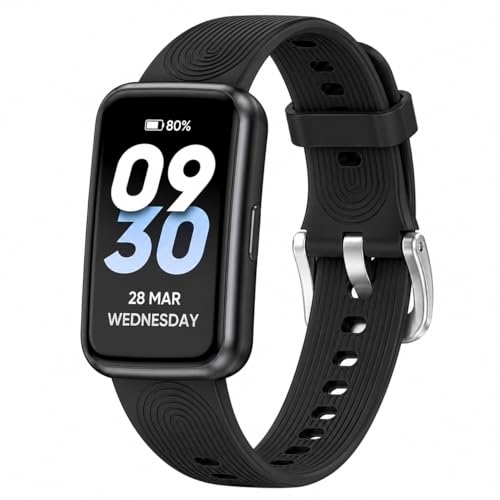
Best for: Simple step and heart-rate tracking
This slim fitness tracker is designed for people who want basic health data without pairing a phone. It works as a standalone watch, so setup should be simpler than with app-dependent wearables. The band measures 0.6 inches wide and weighs 1 ounce, which keeps it compact for all-day wear. Around $20, it also costs far less than most full-featured smartwatches.
Its main strength is independent tracking. The device records heart rate and stress around the clock, plus steps, calories, distance, and workout information. It includes 100 sports modes, but only 10 come preloaded. Adding the rest requires the companion app, so the no-phone design has one clear exception. The listed 30-meter water resistance may suit swimming and everyday water exposure, though buyers should check the maker’s guidance before diving. The listing also promises long battery life, but it does not give a specific runtime.
Pros
- No phone or app is needed for basic tracking and watch use.
- The 1-ounce body and 0.6-inch band should feel less bulky than many smartwatches.
- Heart-rate, stress, step, calorie, distance, and workout tracking cover common fitness needs.
Cons
- Only 10 of the 100 sports modes are installed initially. The others require an app.
- No exact battery runtime is listed, so buyers cannot estimate charging intervals.
2. Fitness Tracker
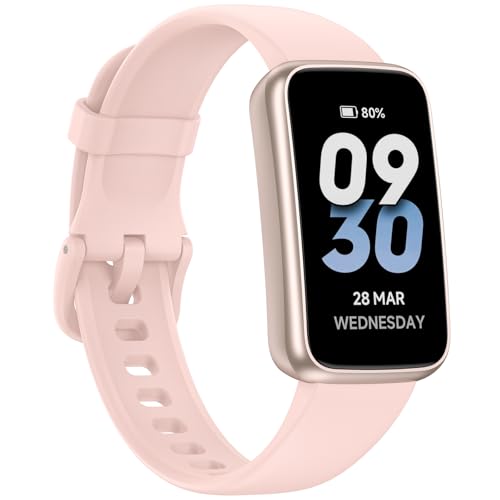
Best for: Simple step tracking without smartphones
This slim fitness tracker works like a basic watch without requiring an app or phone connection. It weighs about 1 ounce, and its 0.6-inch band should feel less bulky than many smartwatches. The battery lasts up to 14 days per charge, with about 1 hour needed for charging. Standby time reaches 30 days. Around $20, it targets buyers who want simple activity data without managing another smartphone device.
The tracker includes step counting, calories, distance, heart-rate zones, and workout tracking. It lists 100 sports modes, but only 10 come preloaded. Adding the remaining modes requires the companion app, which conflicts with the tracker’s phone-free appeal. Five watch faces are built in, while more than 150 options and photo-based faces become available after connecting to the app. Its 30-meter water resistance may help with swimming and everyday splashes, but buyers should not treat that rating as proof of safe scuba use.
Pros
- No app or phone is needed for basic watch and fitness functions.
- Up to 14 days of use reduces frequent charging.
- The 1-ounce body and narrow band suit people who dislike bulky watches.
Cons
- Only 10 of the 100 sports modes are available without the app.
- Extra watch faces, photo customization, and added modes require a phone connection.
1. Casio AE-1500WHX-1AV Digital Sports Watch

Best for: Outdoor work and larger wrists
The Casio AE-1500WHX-1AV is a digital sports watch built around readability and low maintenance. Its wide LCD shows the time, date, and active functions in a quick-to-read layout. The extra-long resin band fits wrists from about 145 to 235 mm, while the resin case and crystal keep the design practical for daily wear. Around $24, it offers a lot of function for a modest price.
Its CR2032 battery is rated for about 10 years, so replacements should be infrequent. The 100-meter water resistance suits swimming, workouts, rain, and routine wear. Timing tools include a 1/100-second stopwatch, split timing, first- and second-place results, and a 24-hour countdown timer with auto-repeat. Five alarms include one snooze alarm, and Dual Time helps track another zone. An amber LED with afterglow improves visibility at night. The full auto calendar runs through 2099, with 12- and 24-hour formats. Accuracy is rated at about ±30 seconds per month.
Pros
- Large LCD makes the time and date easier to read outdoors or during work.
- Extra-long band covers approximately 145–235 mm wrists.
- Ten-year CR2032 battery reduces routine maintenance.
Cons
- The oversized case and display may feel bulky on smaller wrists.
- The resin design looks utilitarian and offers less dress-watch appeal.
Buying Guide
The key factor is the movement type, because it determines how often the watch needs winding and how accurately it keeps time. Choose hand-wound if you enjoy daily maintenance, or automatic if you want wrist movement to power it.
- Movement type: Hand-wound models usually need winding every 24 to 48 hours. Automatic watches often continue running for 36 to 80 hours when fully wound.
- Power reserve: Look for at least 40 hours if you remove the watch overnight. A 70-hour reserve gives more flexibility across a weekend.
- Accuracy: Basic mechanical watches can gain or lose 10 to 30 seconds daily. If precision matters, consider a model rated within 5 to 10 seconds per day.
- Case size and crystal: Choose a 36 to 40mm case for a smaller wrist, or 40 to 44mm for a larger wrist. Sapphire crystal resists scratches better than mineral glass.
- Water resistance and service: Choose 50 meters for hand washing and rain, or 100 meters for swimming. Plan for a professional service about every 5 to 8 years, often costing $150 to $500.
If you cannot have everything, prioritize the power reserve, since it controls how often the watch stops.
Frequently Asked Questions
How do no-battery watches work?
No-battery watches work by storing energy mechanically instead of using a disposable cell. Hand-wound models use a crown, while automatic versions wind through wrist movement. Most mechanical watches run for about 36 to 80 hours after fully winding, then stop until wound or worn again.
What is the best type of battery-free watch?
The best battery-free watch type depends on how you wear it, but a hand-wound mechanical model suits people who want simple, traditional operation. An automatic watch reduces daily winding, while a solar watch needs light and still contains a rechargeable cell. Check the power source before buying.
Can a mechanical watch keep accurate time?
Yes, a mechanical watch can keep accurate time, but it usually drifts more than a quartz model. Typical mechanical movements may gain or lose roughly 10 to 30 seconds per day, depending on position, temperature, servicing, and how fully wound the mainspring remains.
Are automatic watches truly battery-free?
Yes, automatic watches are truly battery-free because a winding rotor powers their mechanical movement. They still need regular wear or manual winding, and many stop after about 36 to 80 hours off the wrist. A quartz watch, even a solar-powered one, uses an electronic power cell.
Conclusion
Casio AE-1500WHX-1AV Digital Sports Watch is the top pick for shoppers who want a tough, readable digital watch with a long-lasting power setup and a large display. If your priority is a slimmer case or a more traditional look, choose a solar or automatic alternative instead, since its design may fit office wear better. Before buying, double-check the case size, strap compatibility, pack quantity, and current price because listings can vary by seller. Also confirm the model number, water-resistance rating, and button layout. A low-maintenance watch should still feel comfortable during daily wear. Match the features to your routine, then choose the option that gives you useful functions without paying for extras you will not use.