7 Best Flamenco Books for Beginners
The Hal Leonard Flamenco Guitar Method is the top pick for most buyers, thanks to its clear, step-by-step path through core flamenco techniques. Among the best flamenco books, it is especially useful for players who want a practical starting point rather than a history of the style. Its focus stays on guitar skills, so readers can move from basic exercises toward more musical playing.
This guide is for new and developing guitarists who want structured practice at home. For this type of book, the key factors are technique coverage, lesson clarity, notation, and the difficulty of the included pieces. A strong method should explain right-hand patterns and flamenco rhythm without assuming advanced knowledge. The seven picks below are ranked with clear reasons and honest drawbacks for each, so you can choose a match for your skill level and practice goals.
Quick Comparison
| # | Product | Best For | Price | |
|---|---|---|---|---|
| 1 | Hal Leonard Flamenco Guitar Method | Beginners Learning Flamenco Fundamentals | ~$15 | View → |
| 2 | Berklee Flamenco Guitar Technique, Theory & Etudes | Advanced Technique-Focused Guitarists | ~$30 | View → |
| 3 | Flamenco Explained Book | Readers Seeking Flamenco History | ~$18 | View → |
| 4 | First 50 Flamenco Pieces for Guitar Songbook | Players Building Repertoire | ~$20 | View → |
| 5 | Flamenco Rumba Solo Guitar | Rumba Performance Practice | ~$20 | View → |
| 6 | Play Solo Juan Martín Flamenco Guitar Book, Vol. 1 | Juan Martín Style Students | ~$30 | View → |
| 7 | Arpeggio Songs for Guitar | Arpeggio-Focused Classical Guitarists | ~$10 | View → |
7 Flamenco Books Worth Reading
The list is ranked from number seven down to the top pick, with each book chosen for a distinct strength.
7. Arpeggio Songs for Guitar

Best for: Guitarists building arpeggio song skills
This book focuses on arpeggio songs for beginner and intermediate guitarists. Its scope covers acoustic, classical, fingerstyle, Spanish, and flamenco guitar, so it may suit players who want material beyond basic chord drills. The title does not provide a page count, song total, tuning details, or included audio resources. Buyers should check the listing carefully before ordering.
The main appeal is its song-based approach. Instead of presenting arpeggios only as isolated picking patterns, the book appears designed around complete musical pieces or studies. That format can make practice feel more connected to real playing. It also covers several guitar styles, from standard acoustic work to more specialized Spanish and flamenco techniques. Around $10, it could be a low-cost addition to a lesson plan or practice collection. Still, the available product details are limited, so it is hard to judge notation quality, arrangement difficulty, or how much material the purchase includes.
Pros
- Covers both beginner and intermediate playing levels.
- Includes material for acoustic and classical guitar.
- Addresses fingerstyle, Spanish, and flamenco approaches.
Cons
- No page count, song count, audio access, or contents list is provided.
- Arpeggio-focused lessons may not replace a broader guitar method book.
6. Play Solo Juan Martín Flamenco Guitar Book, Vol. 1

Best for: Guitarists learning solo flamenco basics
Play Solo Flamenco Guitar with Juan Martín, Vol. 1 is an instructional flamenco guitar title focused on playing without an accompanying ensemble. The name identifies Juan Martín as the featured teacher or performer, while “Vol. 1” suggests an entry point to a larger series. Buyers should expect material centered on flamenco technique and solo playing, not a broad guide to every guitar style. The approximate price is around $30, though listings can change.
Its strongest point is the narrow focus. Players who want flamenco material may find the subject more useful than a general guitar course. The solo format also points toward independent practice, which can suit musicians who want to build rhythm, phrasing, and coordination on their own. Still, the available listing provides no confirmed information about the format, lesson count, playing level, included materials, or whether notation and audio are part of the package. Check the seller’s description before ordering, especially if you need a book, video, or downloadable course.
Pros
- Focuses specifically on flamenco guitar rather than general guitar skills.
- Names Juan Martín, giving buyers a clearly identified flamenco source.
- Solo-playing emphasis may suit independent practice without an ensemble.
Cons
- The listing gives no details about format, lesson count, notation, or included recordings.
- As Volume 1, it may provide only an introduction rather than advanced flamenco coverage.
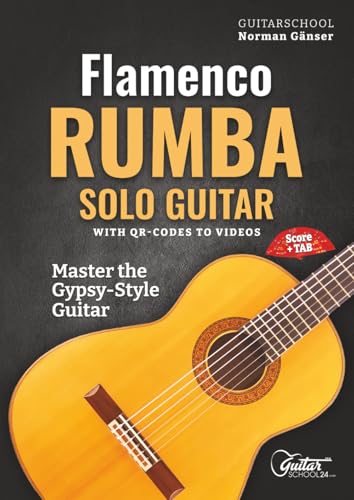
5. Flamenco Rumba Solo Guitar
Best for: Self-guided flamenco guitar learners
Flamenco Rumba Solo Guitar is a music-learning book focused on gypsy-style guitar playing. It combines standard musical score with guitar tablature, giving readers two ways to follow each piece. QR codes link to companion videos, which can help clarify rhythm, finger placement, and phrasing that printed notation cannot fully show. At around $20, it targets players who want a focused lesson format without paying for a full online course.
The strongest feature is the mix of written and video instruction. Tab can make the notes easier to locate, while the score supports readers who already understand standard notation. The videos may also help with the quick, syncopated feel common in rumba playing. Still, the available product information does not list the number of lessons, total pages, song titles, video lengths, or included materials. Buyers should treat it as a focused guitar guide, not a complete course with a stated curriculum.
Pros
- QR-code videos add visual help beyond the printed lessons.
- Score and tab support both notation readers and tab-focused players.
- The rumba focus gives practice a clear musical direction.
Cons
- QR codes require a compatible device and internet access.
- No lesson count, page count, song list, or video duration is provided.
4. First 50 Flamenco Pieces for Guitar Songbook

Best for: Players building a flamenco repertoire
David Leiva’s First 50 Flamenco Pieces You Should Play on Guitar is a guitar songbook for players who want a structured introduction to flamenco music. It includes 50 pieces drawn from 10 essential flamenco palos, giving the collection more variety than a book focused on one form. Each selection uses standard notation, guitar TAB, and fingerings. That combination can help readers follow the written music while checking fret positions and left-hand choices.
The main strength is its focused scope. Fifty pieces provide enough material for regular practice, while the 10 palo categories give players a wider view of flamenco rhythm and style. The book also fits learners who prefer printed music over loose online lessons. At around $20, it offers a reasonably priced way to add flamenco material to a guitar library. The available details do not confirm a page count, audio tracks, difficulty ratings, or a digital edition, so buyers should check the specific listing before ordering.
Pros
- Includes 50 flamenco pieces for a substantial practice collection.
- Covers 10 palos, giving players exposure to multiple flamenco forms.
- Combines standard notation, TAB, and fingerings in one resource.
Cons
- The listing does not confirm audio examples, which some learners need for rhythm and phrasing.
- Players who rely only on chord charts may find the notation and TAB format demanding.
3. Flamenco Explained Book

Best for: Curious readers exploring flamenco basics
Flamenco Explained appears designed for readers who want a focused introduction to flamenco. The title points to an educational format, but the available listing does not identify the author, publisher, page count, edition, illustrations, or physical format. Buyers should check those details before ordering. Without them, it is difficult to judge how deep the coverage goes or how well the material fits a particular learning goal.
The clear selling point is its narrow subject. A dedicated guide may be easier to approach than a broad book about Spanish music or dance. Around $18, it also sits below the cost of many specialist books, though prices can change. Still, the limited product information leaves major questions unanswered. There is no confirmed word count, lesson structure, audio access, glossary, or coverage of flamenco history, rhythm, singing, guitar, and dance. Treat it as a possible starting point, not a complete course, until the full description confirms what it includes.
Pros
- Focuses specifically on flamenco, which may suit readers seeking one subject.
- Costs around $18, keeping the initial purchase relatively modest.
- The explanatory title suggests an accessible introduction rather than an advanced reference.
Cons
- The listing provides no confirmed page count, format, author, or included learning materials.
- Buyers cannot tell if it covers dance, guitar, singing, history, or practical exercises.
2. Berklee Flamenco Guitar Technique, Theory & Etudes

Best for: Flamenco guitarists building solo skills
This Berklee guide focuses on flamenco guitar technique, theory, and etudes for solo playing and accompaniment. It covers three core areas, rhythms, scales, and chords, so the material can support both technical practice and musical understanding. The book is written for guitar, not for a general music theory audience. It also includes online media, which adds a listening or demonstration component beyond the printed lessons. At around $30, it sits in the midrange for a specialized guitar method book.
Its strongest feature is the mix of traditional and modern flamenco styles. Players can study established rhythmic ideas while also exploring newer approaches to arranging and accompaniment. The solo and accompaniment focus gives the guide a wider purpose than a scale-only method. Etudes provide musical material to practice, while the theory sections can explain how chords, scales, and rhythms work together. The online media may help clarify passages that are difficult to understand from notation alone. Still, the listing does not provide page counts, media length, access terms, or a stated difficulty level, so buyers should check those details before ordering.
Pros
- Covers rhythms, scales, and chords in one guitar-focused guide.
- Includes etudes for solo practice and accompaniment work.
- Combines traditional flamenco ideas with modern styles and online media.
Cons
- The lack of a stated skill level makes fit harder to judge.
- Online media access details, including format and duration, are not specified.
1. Hal Leonard Flamenco Guitar Method

Best for: Players building a flamenco foundation
This 64-page Hal Leonard method book introduces flamenco guitar through step-by-step instruction and Spanish repertoire. It focuses on guitar technique, rhythm, and song practice instead of broad music theory. The package combines the printed book with online audio, giving learners a sound reference for the written examples. At around $15, it costs less than many private lessons or larger method courses, though steady practice remains necessary.
The audio is the clearest standout. Flamenco rhythms can be difficult to judge from notation alone, and recordings show how the exercises should sound. The compact length also feels less intimidating than a thick theory manual. Authentic Spanish pieces add a practical goal beyond drills, which can keep practice focused. Still, this is an introductory book, not a complete flamenco curriculum. Buyers should not expect advanced instruction on complex forms, performance technique, or concert-level repertoire. Online audio also requires internet access and a compatible device.
Pros
- Online audio provides useful rhythm and example references.
- The 64-page format offers a focused learning path.
- Spanish pieces give practice a clear musical purpose.
Cons
- Limited page count may leave advanced players wanting deeper instruction.
- Online audio is less convenient without reliable internet access.
Buying Guide
The most important factor is the book’s subject and skill level. Flamenco guitar, dance, singing, and history require different formats, so a well-matched guide will save time and prevent confusing practice material.
- Subject focus: Choose a guitar method, dance manual, vocal guide, or cultural history book. A general overview suits newcomers, while players should seek a book with at least 10 technique lessons or song studies.
- Difficulty level: Check for labels such as beginner, intermediate, or advanced. Beginners should look for basic compás, posture, and rhythm exercises before advanced forms such as soleá or bulería.
- Notation style: Guitarists should confirm that the book includes standard notation, tablature, or both. A useful method usually provides 20 or more written examples and explains fingerings clearly.
- Audio or video support: Prioritize editions with downloadable tracks or video access. Aim for at least 30 minutes of recordings, including slow practice versions and full-speed performances.
- Book format and price: Pick paperback for music-stand use, hardcover for reference, or digital format for portability. Many practical methods cost $20 to $45, while specialist histories often cost $15 to $35.
If you cannot have everything, prioritize a clear match between the book’s subject, your ability, and your intended use.
Frequently Asked Questions
How do I choose a flamenco book?
You can choose a strong flamenco book by matching its purpose, level, and format to your needs. Look for technique exercises if you play, listening guides if you study history, and biographies if you want cultural context. Beginner guitar methods often spend 20 to 40 pages on posture, rhythm, and basic rasgueado patterns.
What should beginners look for in flamenco books?
The best flamenco books for beginners explain rhythm, hand position, and terminology before introducing complex falsetas. Choose a title with audio access, clear diagrams, and short practice steps. A useful starter may cover three to five palos, such as soleá, bulerías, tangos, and alegrías, rather than listing dozens without instruction.
Can flamenco books help me learn guitar?
Yes, flamenco books can improve guitar technique, dance knowledge, or cultural understanding when you pair reading with regular listening and practice. A guitar guide might include notation, tab, and compás counts, while a history book may trace the art across several generations and explain terms like duende and palo.
Are flamenco books suitable for complete beginners?
Yes, flamenco books suit complete newcomers, but the right choice depends on whether you want music, dance, history, or poetry. Beginner-friendly titles usually define Spanish terms and use gradual lessons, while advanced texts may assume prior theory and discuss uneven cycles, such as 12-beat compás, in greater detail.
Conclusion
Hal Leonard Flamenco Guitar Method is the top pick for guitarists who want a structured introduction to flamenco technique, notation, and practice material. If your priority is dance, history, or a broader cultural view, choose a book focused on that subject instead, since a guitar method may not match your goals. Before buying, double-check the edition, physical size, format, instrument compatibility, included quantity of books or media, and current price. Some listings bundle lessons with audio, while others sell the book alone, so compare the contents rather than the cover image. Check the language and skill level, too. A clear match will make your next study session more useful.